[#FLExploreFilm] A short script

A short script:


INT. ROOM

FADE IN

A YOUNG MAN is sitting huddled in the center of a room, on a heart shaped carpet on the floor. He has a vague distant expression on his face. He is wearing a dirty A-shirt (vest) and boxer shorts, and is bare feet.

Behind and all around him, the room is all girly. Painted in shades of pink and white, with flowers, rainbows, fairies and unicorns. The furniture is white: a well made bed, a chest (at the foot of the bed) a closet and a shelf full of dolls. There are no windows.

A DOOR LOCK is heard.

In front of him, a white door opens. A BEARDED MAN enters the room. He is tall, strong, blond, with long hair, gathered in bunches (ponytails) on both sides of his head. He is wearing eyeliner and a "sweet lolita" dress.
Outside, behind the BEARDED MAN, there are two suited bodyguards on each side of the door.
While the door is opened, it can be heard a crowd cheering at distance.

YOUNG MAN​
You know you won't get away with it, right?

BEARDED MAN
I don't care. I'm just doing my job. You know what you have to do.

BEARDED MAN gives the YOUNG MAN an object and leaves the room, closing the door behind him.
The YOUNG MAN examines the object.

CLOSE UP at the HAND

On the opened hand of the YOUNG MAN there is a lipstick.

FADE TO BLACK

THE END

The storyboard:


Activity: https://www.futurelearn.com/courses/explore-filmmaking-2/steps/35067

Suggestion of script writing (and production management) software: Celtx (www.celtx.com)
(It has a free to use plan - with limitations, of course.)

Shot types: http://www.mediacollege.com/video/shots/

[#FLExploreFilm] Explore Filmmaking

Hello!

Last week I enrolled at FutureLearn's MOOC Explore Filmmaking.

Great expectations there!

You can find my profile here: https://www.futurelearn.com/profiles/1794979.

See you there!

[Live!: AHoA] The end of "Live!: A History of Art for Artists, Animators and Gamers"

That's it. The end of "Live!". It was very interesting and took me way deeper in understanding Art as I thought it would be. I thought it would be about learning the history (the movements, the "isms"), but actually it went further: it became a general view, but enabling me to look at any kind of art with different eyes. I really learned a lot!

I had a tough time writing the final essay (here), but I think I wrote there about almost everything I learned and felt in this course, so I would like to share it here.

---

This course asks how artists actively make a history for their own practices by thinking about their creative process as a “conversation” with a wide range of art from the past. How has this course helped you establish a greater sense of your own art historical awareness?

By building a picture of the cultural, social and political context of the time, it makes a little easier to understand how and why artists have created art. They all had strong motivations: from spiritual and cultural records (cave paintings), through making a way of living (commissioned works), to social criticism and revolutions (surrealism, modern art). The negation of beauty, shapes and logic – behavior extremely flashy until today – was not by random and had many meanings behind it (some can be “read” within the piece, others not). There is the Fine Arts and “art for the beauty”, but there is also the bizarre, the ugly, the shocking, the bold, and although it makes me instinctively reject it, it also provokes and can still tell me a story or message. Our first assignment was an exercise on that direction: we tried to shift our perception about the reality, trying to give the universe another meaning, to tell a story.

By comparing my work with the great artists from the past, I move forward on understanding the creation process – mine and the artists'. I can perceive the differences between both works and learn from it, but it goes further: it is like I was able to put myself in the place of the artist, try to understand their mental process, what were they thinking, intending, understanding what was done, how and why. By mixing history, putting together works from now and then, from famous artists to not so famous (to us, students), I can have a much wider feeling on how art works, with a much clearer view on how history went and still is going.

By literally using their work (like Duchamp did), I am able to rethink about what can be considered art and about the production process. I can think about creating new things using the old (and so, nothing is actually “new”), but also about the value of handcrafted and the mass produced. Our last assignment, using Diego Velázquez's “Las Meninas”, made us see the masterpiece by a different angle, turning it into something else. Some might think works created that way were not original or valuable, but they are wrong, since they have new meanings and new stories to tell – even if the story is simply about working on top of Velázquez's work.

The recording of the creation process was also a powerful tool, since I could analyze my own line of thinking on a different perspective. I may look now at myself in the position of an external viewer, being able to even criticize me, expanding my potentials and improving my performance on creating art. And by looking at other students' works, I could learn a lot about different ways of thinking and techniques.

This course shifted our way of learning. Typical art history would be studied by following a straight timeline, passing through all the “isms” and art movements. However, here we looked at art how it is now: a mix of everything. Today, with internet and knowledge spreading through the world, art from anytime and anywhere is accessible for anyone. Artists now have a much more globalized mind, with a much wider range of references and influences. The way we see art today, looking back, with all the past available completely at the same time, is completely connected – and connected with everything in our lives. That way, this course tried to make something different, to make us “eat art in the breakfast”, making it part of our day and I think it did it wonderfully.


How has the process of receiving and giving feedback influenced your approach to your work?

We could study without this feedback practice – or even by ourselves, without teachers and colleagues – but the experience will absolutely be poorer – and I believe incomplete.

Isolated, it is impossible to absorb completely all the meaning in the art and to grow as art perceivers and producers. Our course proposal (emphasized since our first week in lectures and forums about “community and network”) is to put together its participants, interacting with colleagues and instructors to exchange opinions and experiences. And beyond that: by showing our works, we could receive feedback from public. By showing our production process, we allow our colleagues and ourselves to understand artists (all of us) mental and technical processes and objectives, even allowing us to suggest ways to improve our performance. This interactivity, this feedback, makes the creation somewhat collaborative, turning our art much more clear and with better receptivity. It is impossible not to change the way of thinking and creating under those circumstances.

I received peer evaluations in my first required assignment, with which I agree completely in the technical aspects (about placement and lighting of objects in my photographic composition), but they also helped me see how wide can be the public interpretation on a piece by seeing meanings I have not thought about before. That certainly made me think more before creating and knowing that, even if I rethink everything, I will not be able to reach some people and also will not be able to foresee new meanings viewers will certainly create for my works.

However, I believe a particular discussion was the most revealing for me, the one responsible for expanding my horizon about what is art: in the thread “Sketchbook Assignment 1: My World and the Art World” by student Carol Ann Waugh. She wrote: “art needs to actively engage and connect with the viewer”. Considering art being about telling a story, there is many different ways to do so - some working better with a person, some working better with another.

I had the tendency in thinking on good and bad (for me and for the viewers), but there really are people out there that do "enjoy" other not very good feelings: melancholy, longing, sadness, fear... It really depends on how the viewer identify with the piece. If it is telling the public something, then it is working (with them, specifically).

 Art is not everything, but anything can be art. I understand that now.

---

My final words: thank you very much to Ms. Jeannene Przyblyski, Ms. Jen Hutton and everybody else from Live! staff team! Thank you CalArts for the support! And thank you Coursera, for making all this possible!

See you next time!

[Live!: AHoA] Required Assignment 3: Work of Art Redux (Track A) - Las Meninas Sombrías (The Gloomy Girls)

I'm a fan of pareidolia and I couldn't help noticing a big face in the background of Velázquez's "Las Meninas". It would be very creepy to be watched by a hidden (and huge) observer. But that would be just another viewer in Velazquez play with see and be seen. It would make sense.

Diego Velázquez's "Las Meninas" (1656).

So I started looking at the painting, paying attention to the "darker" side of it.
The background is very dark and foggy. In the closest foreground, we have these well illuminated subjects that in one hand seem to be elegant and delicate, but in the other hand, have this penetrating stare and a very pale skin - almost dead-like. The Infanta's hair is so blonde and bright that it almost looks white, making the child looks like a very short old woman or a ghost. The two dwarfs at the right (Maribarbola and Nicolas Pertusato) gives the piece an exotic mood, as if they were some kind of circus attraction.
Behind them all, Velazquez himself is on a darker "corner" of the framing - he is also wearing black, with a holy cross on his chest and have a concentrated expression, that could be read as bored or apathetic, almost dead...
In the next level behind that, we have two figures very disturbing: some kind of nun (a religious figure that always reminds us of the holy... and the unholy!) and a very blurred and dark woman. They don't seem to pose for the picture, but to observe the scene, quietly, in the dark...
In the furthest wall, there is the mysterious man, fully wearing black and spying all our characters. He is not part of their group and he seems like a doorkeeper, guarding the threshold between the dark room and a light bright place (behind him): the guardian between worlds...

And then, hidden in the wall, to big for us to realize when near it, there lurks the monstrous face, looking at us (viewers) or at the painting's subjects, hovering above them, judging them and lusting after them. Or maybe warning us of their macabre nature, state or destiny - or our own.

All those elements point to one thing: death. When you realize those persons in the painting are dead for a long time, you can't help thinking how disturbing it can be, having those stares from those ghosts of the past haunting you for all eternity.

I tried to make this interpretation more clear in my humble version of Las Meninas:

Las Meninas Sombrías (The Gloomy Girls; 2014) by Ricardo Roehe.


_____________
My submission: https://class.coursera.org/livearthistory-001/human_grading/view/courses/970641/assessments/17/submissions/3160.
Forums: https://class.coursera.org/livearthistory-001/forum/thread?thread_id=6472

[Live!: AHoA] Required Assignment 2: One Thing and Then Another (Track A) - "Sorridi!"


"Sorridi!"
Description of the submission:
At first, I just picked up an image of Leonardo's DaVinci "Mona Lisa". Then, I've isolated the woman from the painting and placed her where she would be today (when making her portrait): a photographic studio. Lastly, I've created a fictional passport for her and composed it with the original painting's background.


Explanations:

ART:
Leonardo DaVinci's "Mona Lisa" is one of the most acknowledged pieces of Art in the history. His painting skills are unquestionable.

Mona Lisa at the studio.
MAKING:
But in Leonardo's time, that was his job. Painting was how he made his living. People would pay for him to create images and, with his techniques and talent, shape them into pleasurable pieces. It was not simple reproduction. The subjects were real, but the background and "enhancements" in the subjects' appearance were not. Photographers certainly followed Leonardo's steps. But today, they use an infinity of gadgets, artificial lights, layers of filters and hours of image manipulation.

Ready to go anywhere (not).
PORTRAIT:
Therefore, "Mona Lisa" was a commissioned work. In the end, for the casual viewer, it was just a portrait.


Insights:
The proposal of the assignment is to turn an image into something else. By deconstructing a painting (its depictions and process of creation), a viewer would end up in a room full of canvases, pencils, brushes, paint, drafts (for reference), rags, rulers, gadgets of all kinds and the painter himself. The subject himself could be present in the case of a portrait. It would be a strange feeling to the subject...
How did the subject look at this strange and messed up environment? How was his point of view? How was it for the model to be watched and captured by the artist? Does he feel intimidated? Exposed? His every flaws analysed? Does he feel interrogated?
Being surrounded by this scenario is true even today. The same situation, different equipment. Today, Mona Lisa's portrait would have been created differently: in a photographic studio - maybe an even scarier environment: dark and cold...
In the end, she would have her picture taken. Much faster and banal. A person's image is in any document today. Documents many times required for a person when travelling or even when going not so far. At Mona Lisa's time, I wonder if she could go anywhere. Are we not much more interrogated today?


___
Submission: https://class.coursera.org/livearthistory-001/human_grading/view/courses/970641/assessments/15/submissions/1626
Forum thread: https://class.coursera.org/livearthistory-001/forum/thread?thread_id=6303.

[Live!: AHoA] Week 6 Discussion Prompt: Reality distortion

Assuming "reality distortion" in Art means "shaping the world into something different", I do believe it allows artists to create the impossible, to tell fantastic stories, to produce wonder in the viewers and to explore the understanding of life, the universe and everything.

Also, I believe every artist does that - to create illusions and to tell their story. With their styles and techniques, every artist filter reality, highlighting elements and erasing another. It could be as obvious as a mythical creature in the foreground or an exaggerated caricature, but it could be simply a color, brighter or slightly different from what it was in reality.


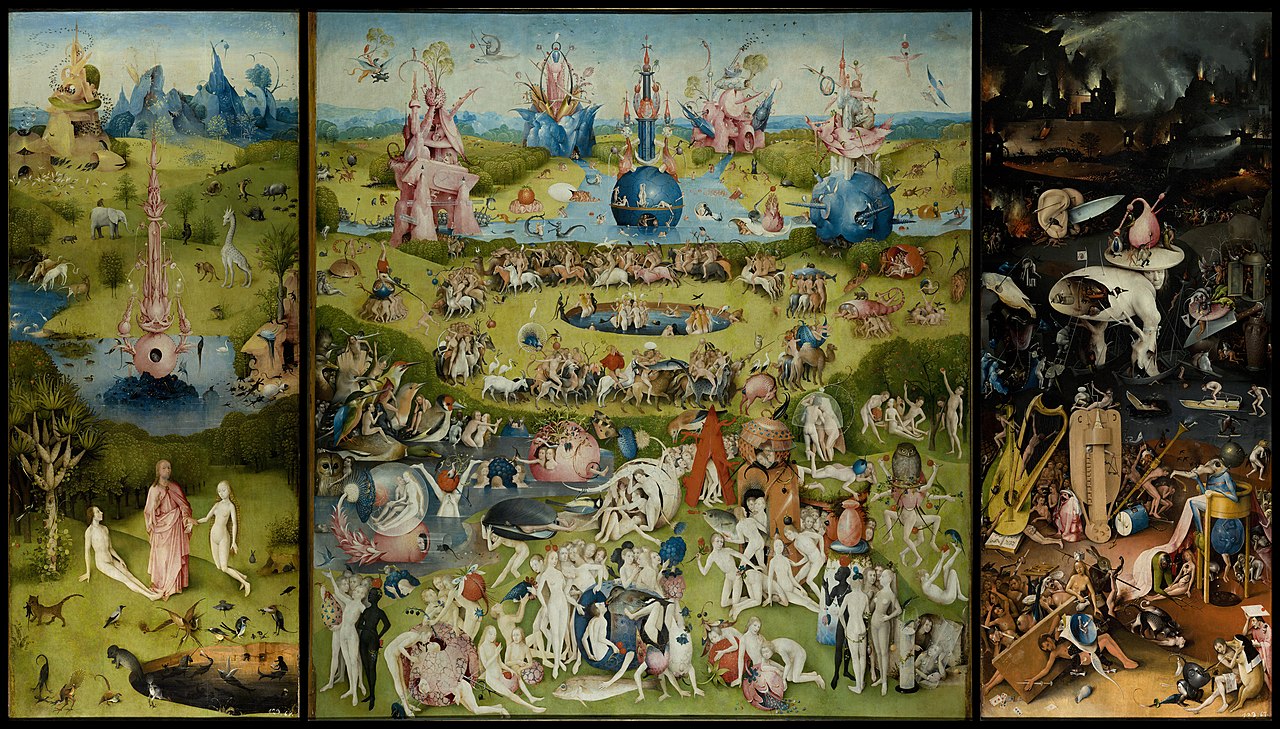
However, I do not believe the artists wanted the reality to really be like those distorted worlds created. For instance, I do not believe Bosch would like to live in that hellish world he created in The Garden of Earthly Delights - where even the heavenly part of it is bizarre and scary.

The Garden of Earthly Delights by Hieronymus Bosch.
By the way, you download from Wikipedia a very high resolution amplified version of this piece here - but careful: the file has 30,000 × 17,078 pixels and more than 220MB.

___
Forum thread: https://class.coursera.org/livearthistory-001/forum/thread?thread_id=5716

[Live!: AHoA] Sketchbook Assignment 4: Keeping Time (track A) - Animation

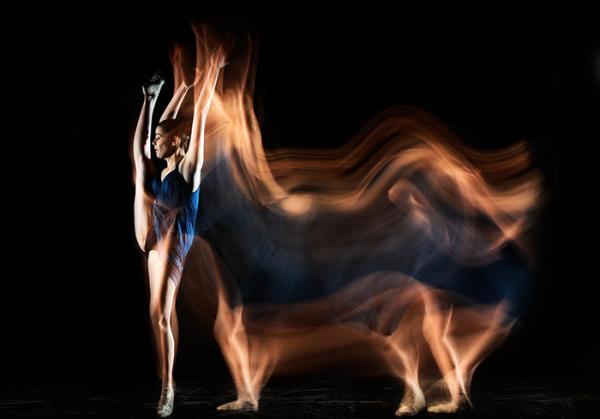
It is amazing how movement can be represented with a still image.

For example, this simple animation:
Is composed by many drawings (66 to be precise) to be used as sequential frames and produce a mere 2s animation.

Together, all frames look like this:
The trajectory of the head does something like this:
And a blurred drawing like that is exactly how we see movement in photographs:
Photo by Manuel Cafini
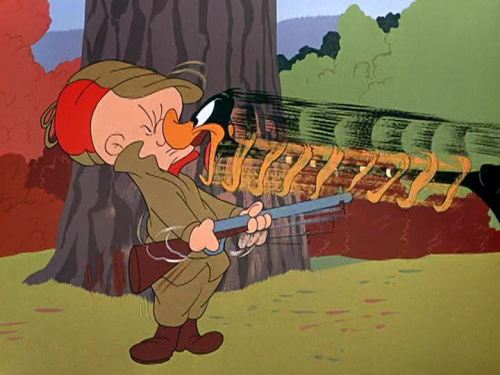
And similar to the stylization traditional animators use to give illusion of fast movements:

However, in animation and paintings, the drawn movement doesn't have to be accurate. In fact, it must not be accurate, because it has to give the feeling of the movement. The exact reproduction of that looks strange and unreal in many times.
Here is where the craftsmanship of the artist come in.

___
Forum thread: https://class.coursera.org/livearthistory-001/forum/thread?thread_id=5379

[Live!: AHoA] Week 5 Discussion Prompt: stopmotion animation and “nature morte” (“still life”)

There are really many stopmotion animations that explore the mortality and supernatural (in the spiritual way). Many artists do explore the cadaveric and creepy appearence of stopmotion puppets and props. Besides Tim Burton, it reminds me of Will Venton ("The Adventures of Mark Twain: Mysterious Stranger"), Jan Švankmajer and Doug TenNapel (and other animators from The Neverhood and Skullmonkeys games).

Mysterious Stranger from "The Adventures of Mark Twain", animated by Will Venton.

The Neverhood
So, one can imagine a connection between animation and “still life” - because of the morbidity,
but also because of the use of still frames (frozen/dead movement/life) to build the animation. But I believe the links stop there.
Animation is not about capturing life, but "releasing" it. Is about tricking the eyes to see what is not there (in opposition to exact representation of "still life"). The techniques applied there are used thinking about the complete collection of frames, not a single frame. In animation, more important then what you see is what you don't see: the work is well done only when you don't perceive its parts, but when you see (and "feel") the whole.
That way, the approach of animation and "still life" must be completely different.

Faces used to create illusion of movement in the film "Paranorman". Not very life-like.


Also, I believe some of those stories and characters are justified by the media used: (stopmotion) animation allows you to represent the impossible - monsters, places, movements, shapes. So it is natural to explore the supernatural (in every way) and out of ordinary with it.

However, I do believe it is a pity that we have today this trend of "creepy" or "weird" visual style when making stopmotion animations. I find that bad, because it stigmatize the technique with just one of many themes and styles.

Fortunately we have significant productions that helps to change this stereotype.

My favorite stopmotion animation is actually an old series called "Plonsters".
Plonsters.
It is a children's television program produced by Anima Studio in 1987 and 1997. Although it has stories produced for kids, it wonderfully explores the liberty of movement and shapeshifting the claymation technique allows us to do.
It is funny, colourful and joyful - one would hardly finds it scary.

There is also a very cute and recent short film called "Room on the Broom", mixing stopmotion and 3D CG animation - a combination that is more and more explored everyday. It tell the story of a witch, but it is not even a bit spooky.
Room on the Broom.
Another mix of techniques, using both 3D and stopmotion, but also 2D traditional animation is the short film "The Bear & The Hare". It has absolutely astonishing visual, with a sensible and touching story.
The Bear & The Hare.
And, of course, we have Aardman Animations, that worked with many famous titles: Chicken Run, Wallace and Gromit, Flusehd Away, The Pirates! Band of Misfits, and, my personal favorite, Purple and Brown.
Purple and Brown
___
Forum thread: https://class.coursera.org/livearthistory-001/forum/thread?thread_id=5365

[Live!: AHoA] Required Assignment 1: World-in-a-Box (Track A) - The Pride of Creation


I call this "The Pride of Creation":
"The Pride of Creation" (2014) by Ricardo Roehe.

I hope viewers can get all the messages on it, but maybe the lighting (and the camera) is not very helpful.


The setting: 

A cardboard box is balanced on the tip of a metal ruler, in the edge of an inclined clipboard. In the other (lower) edge, there are a glue tube, a pencil (at the center) and a pair of scissors. On each side of the clipboard there is lit candle. Everything is on a wooden table.


Interpretations:
I'll write here things that were in my mind while creating this. Please, tell me if you think those are valid for you too.

It is about creators and creation, tools and materials, pride and worship.
One can imagine all those tools are the pride of the artist, but I went further: thinking of the tools as characters in this "story", they were the direct responsibles for the creation (the box, in the center of the altar) and they are the proud ones about it.
It is about creating something better than yourself. Something so perfect it becomes more than an object of pride: it becomes worth worshiping. Such difference between progeny (precise, perfect) and progenitors (weird, shapeless), so different worlds (one completely tridimensional, the others almost flat) might even distance them: the perfection's place is on an altar, everybody else's place is down below.

It is also about symmetry and balance: each thing has its own function and place. Each one is needed to finish the creation:
- The cardboard box is the sublime creation: precisely drawn, cut and glued;
- Glue, scissors and pencil are the creators. The pencil, the most important one, at the center;
- The clipboard is the base for everything: the creation process and also the altar;
- The ruler give measures and direction, but also "rule" the distance between "heavenly" and "mundane";
- The candles give the light for the creation, but also give the fire: the divine element - for the glory, for the worship, for sacrifices, for purification.

And, after all that, it is also a joke, a pun with the tools, its functions, shapes and names. It is about giving them personalities and creating the illusion of life.
The scissors: the strength, a knight in shining armor, with his cutting blades.
The glue: the spirit, white, pure, shaped like a priest or a cleric, with the mission to "bond", to "unite" the masses.
The pencil: the mind, straight, precise, responsible for the design, the thinking, the study.
The ruler: the power, the justice, the "ruler", the one sacred enough to hold the creation.
The box: the "divine creation", the perfection, carefully built, tridimensional, expanding the reality beyond the one from its creators.


Preparation:

It took me a long time to photograph this scene. At first, I tried to balance the pencil on its base, but it was not flat enough (tried to sand it, but couldn't get it right). The idea was also to place the pencil and the box in an angle to create the illusion that the box was balanced on the tip of the pencil (like a champion raising his trophy), but the distance between the objects would be compromised this way. I ended using some clothespins to keep the pen and the scissors standing. The box and the ruler are supported by the wall. But balancing everything, in the right angle and with the right illumination was not easy.


___